

girls clothes |
- Little girls can have their Pi Day dress and twirl in it, too - Fast Company
- The school-to-prison pipeline is getting worse for black and brown girls - The Guardian
- Boutique offers boho chic clothing for women and girls - Greensboro News & Record
- The invisible women and girls who make your clothes - Thomson Reuters Foundation
| Little girls can have their Pi Day dress and twirl in it, too - Fast Company Posted: 14 Mar 2019 06:15 AM PDT 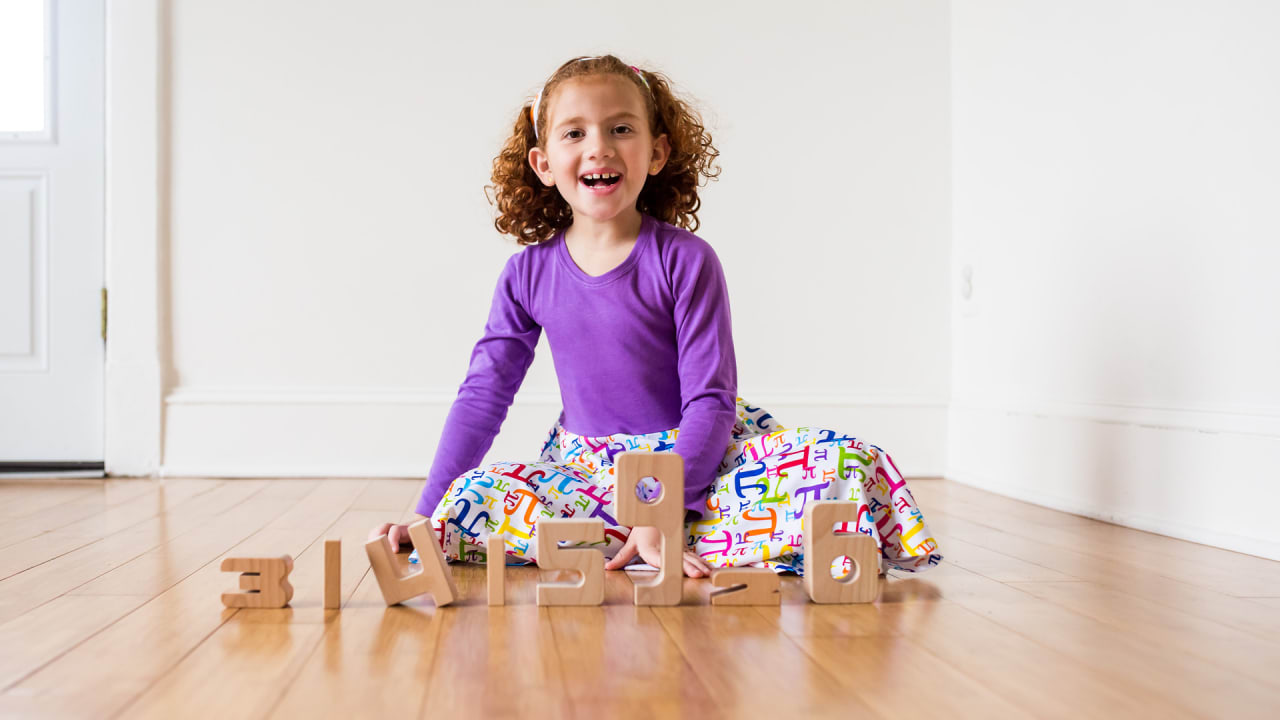 It's Pi Day today, perhaps the geekiest fake holiday on the fake holiday calendar. Kids' clothing brand Princess Awesome wants little girls to know that it's about time they get excited about it. And what's the way to celebrate Pi Day when you happen to be three years old? Well, the obvious answer is to dance around in a dress with 3.14 splashed all over it. Princess Awesome has just released an entire collection of Pi-themed outfits for little girls. Any parent will tell you that the rigid gendering of kids' clothing starts very early. While boys' outfits feature trains and dinosaurs, girls' clothes are covered in princesses and unicorns. So is it any wonder that boys grow up thinking that engineering is cool, while girls are drawn to fairytales? Princess Awesome has made a name for itself by creating fun dresses that focus on themes that don't often appear in girls' clothing, like airplanes, fire engines, robots, dinosaurs, and now, math. But the outfits, which are for newborns to middle schoolers–are still fun. Many of the skirts are specifically designed to twirl in, and they have pockets, which rarely appear in dresses. The subtle message that girls get from these clothes is that science is for them, too. Rockets and trains can be feminine. You can have your Pi dress, and twirl in it, too. Now that's something to celebrate.  |
| The school-to-prison pipeline is getting worse for black and brown girls - The Guardian Posted: 13 Mar 2019 11:00 PM PDT 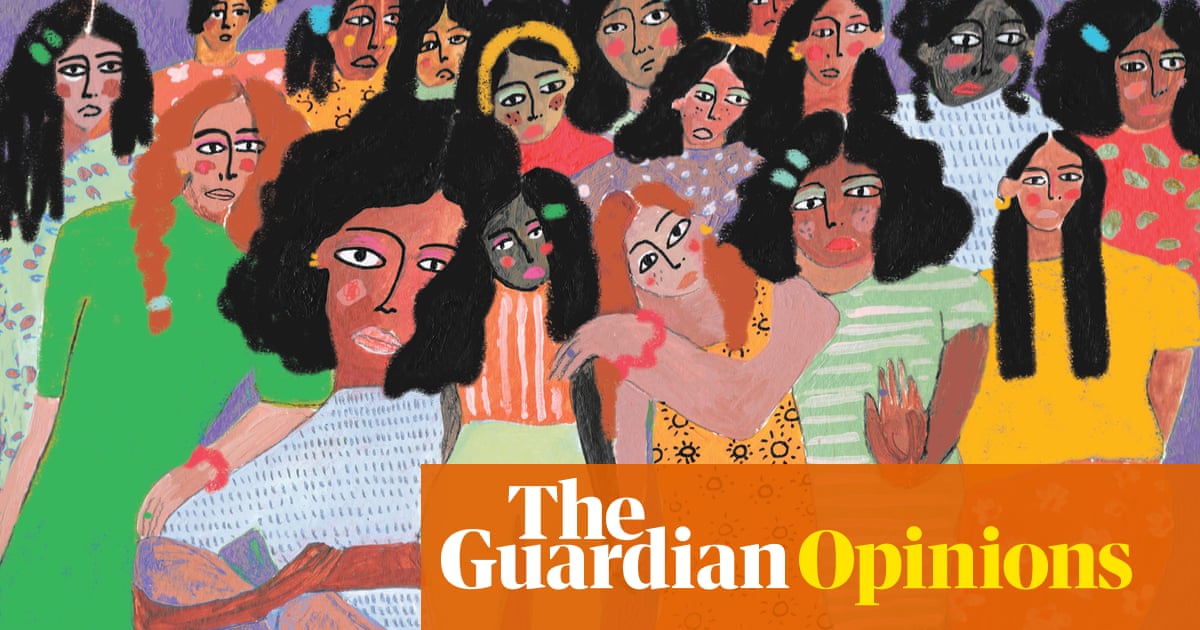 More than 20 years ago, when I was a 12-year-old queer kid coming to terms with her sexuality, I ran away from home. It was after school had let out for the summer, and I spent two weeks in the Florida Keys, joyriding with neighborhood boys, sleeping under a stilt-house restaurant and smoking cigarettes. I was an angry, depressed girl who had spent her childhood pretending to be someone else – except when I found myself in my school's music room. I took guitar and voice lessons, sang in the school chorus and Christmas musical, played the piano. I spent hours writing song lyrics in composition books, choreographed song-and-dance routines for school talent shows. If there was music involved, I was there. After two weeks in the Keys, I returned home, and was immediately taken to the Miami Beach police department for questioning. Who had I been with? How did I get to Key Largo? Why did I run away? Was there trouble at home? These were all questions I had expected, meant to help the police determine if someone had taken me, if I was being abused. But then the questioning changed course. When exactly had I broken into my elementary school in South Beach? Why had I vandalized the music room? I hadn't, I insisted. What a ridiculous idea! I loved our music teacher, Ms Amor. She had known me for most of my life. Even though the cops had verified my alibi, had confirmed that I had spent two weeks three hours from Miami, they insisted I had done it. They were convinced I was a delinquent, that I had stolen equipment from Ms Amor's music room and tagged my nickname all over her office. The most painful part was how the information had come to them: Ms Amor, they said, had called them to report me herself. In the United States, black and Latinx girls are disproportionately punished, criminalized and even physically assaulted in their schools by their teachers, administrators and school police officers. Often they are suspended, expelled or arrested for infractions such as falling asleep in class, talking back to school officials or simply for showing what are considered acceptable emotions when it comes to their white classmates. On 15 January this year, four black and Latinx 12-year-old girls were strip-searched at East middle school in Binghamton, New York. After interacting with the girls in the hallway, the principal, Tim Simonds, found that they seemed to be on drugs. He suspected that they were concealing prohibited substances under their clothes, so he took the girls to the school nurse's office where, for over an hour, they were questioned and given sobriety tests. No one called their parents for consent. Instead, as instructed by the principal, the school nurse and the assistant principal, Michelle Raleigh, told the girls to remove their clothes while they watched. The one girl who refused to disrobe was suspended, and no drugs were found. Why did Simonds suspect the girls of drug use? According to the NAACP Legal Defense Fund, which is now representing the students' families, the principal called three of the girls' parents after the search to say that they had been sent to the school nurse because they had appeared "hyper and giddy" after lunch. The school board now denies that the strip-search happened. The racial disparity in punishments enforced at and by American schools is staggering: a 2015 report by the African American Policy Forum and Columbia Law School's Center for Intersectionality and Social Policy Studies has found that black boys are three times more likely and black girls six times more likely to be suspended than their white counterparts. Black girls, according to the report, have even been punished for wearing their hair naturally. The cases in point are endless. In 2015, a South Carolina school police officer grabbed a 16-year-old girl named Shakara by the neck, violently slamming her backwards (while her body was still in her seat), and dragging her across the classroom floor, allegedly because she had been "disruptive" and argued with her teacher. Her classmate, Niya, who yelled at the cop, calling him abusive, was arrested too. In 2013, 16-year-old Kiera Wilmot, an honors student, was arrested and taken to a juvenile detention center in Florida after a science experiment she had been working on reacted badly and caused a cloud of smoke to erupt from a bottle. The small explosion didn't damage any property or hurt anyone, but she was charged with possessing and discharging a weapon. In Hoover, Alabama, 16-year-old Ashlynn Avery, who suffered from diabetes, asthma and sleep apnea, fell asleep in class and was hit with a book by a teacher. Later, the police were called to remove her from the classroom because she kept falling asleep; she was beaten and arrested. In Avon Park, Florida, six-year-old Desre'e Watson was arrested for throwing a tantrum in her kindergarten class. She was handcuffed and taken to central booking at the county jail. Although many of these stories make national headlines, and in some cases videos of the incidents go viral, the very real problem of the school-to-prison pipeline is getting worse, particularly for black and brown girls. The Juvenile Detention Alternatives Initiative found that in 1992, black girls comprised 29% of all girls with juvenile court cases; in 2002, the number was 30%; and by 2009, it was 40%. By all accounts, this increase is not due to a rise in the criminal activity of black girls. It comes down to decisions made by white school officials and police officers – the choice to arrest and detain black girls when their white counterparts are not punished similarly. These decisions, according to an extensive study conducted by the Georgetown Law Center on Poverty and Inequality, the Human Rights project for Girls, and the Ms Foundation for Women, have been "shown often to be based in part on the perception of girls having violated conventional norms and stereotypes of feminine behavior, even when that behavior is caused by trauma". In other words, black and brown girls are typically marginalized at school in these ways because officials judge that they aren't feminine enough, or the right kind of feminine. Black "giddiness" is considered suspect, black hair is "distracting" and any black girl who expresses unchecked emotion, even a six-year-old, can be sent to the county jail. Teachers might de-escalate situations rather than involving the police, prioritizing their black and brown students' emotional wellbeing and physical safety, as they do with white children. School authorities and police officers could make choices that protect black and brown girls, that support them, rather than choices that lead to their assault and arrest, increasing the risk that they will end up pushed out of the school system and into the juvenile justice system. School policies could, and should, emphasize counseling rather than punishment. I don't have to tell you that Ms Amor – whose name I have changed to protect her anonymity – was white. That even though we had spent many hours together over the years she had been my music teacher, even though I loved her and trusted her and felt safe with her, it was easy for her to believe that I had vandalized her property. When she saw the damage done to the music room, to her office, she didn't think of the Whitney Houston-loving child who dreamed of one day being in Broadway musicals, which was how I saw myself. What she imagined was a brown girl capable of vandalism, breaking and entering, stealing. She thought I would destroy the one place that had brought me joy. And I don't have to tell you that the principal, the assistant principal, and the school nurse at East middle school – who saw these black and brown children's excitement and decided it was criminal – were all white. Would they have assumed that white children laughing and playing were on drugs? Would they have demanded that white children who seemed hyper, or happy, or silly, remove their clothes to prove they weren't guilty of a crime? Would they have called their parents first? After the incident, when community members heard that the four girls were strip-searched, more than 200 people showed up at a local school board meeting to call for the termination of the involved school officials. So far, nothing has been resolved. I never saw Ms Amor again. The police eventually dropped the breaking and entering charges, but I was, from that day onward, deemed a delinquent. I lived under a kind of surveillance, with cop cars constantly pulling me over for random searches, and I eventually became exactly what they expected. I wound up dropping out of school, moving through the pipeline to the juvenile justice system. But I was lucky: I'm a light-skinned Latina in addition to being black, and in school was rarely read as the latter. If I had been visibly black, all the statistics suggest, things would have been much worse for me. Of this I am sure. Ask any black woman.
 |
| Boutique offers boho chic clothing for women and girls - Greensboro News & Record Posted: 04 Mar 2019 12:00 AM PST 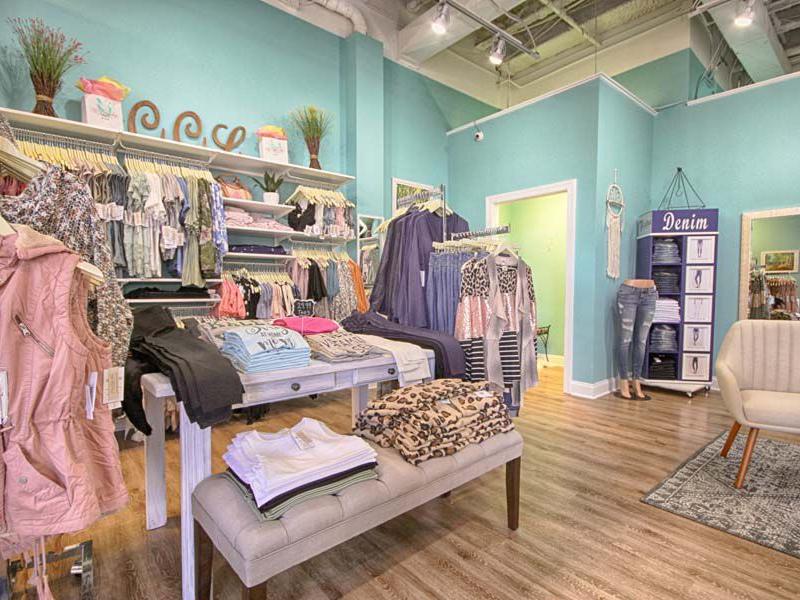 GREENSBORO — The Cozy Calla Lily Boutique has opened at Winstead Commons retail center at 2920 Martinsville Road. The boutique offers trendy clothing for women and girls and accessories like handbags and jewelry. "It's boho and chic. It's feminine. It's comfortable, hence the cozy," said the store's owner Melanie Barilla-Gottfried. The 1300-square-foot shop is a brick and mortar extension of an e-commerce store started by Barilla-Gottfried last year. The shop is a fulfillment of Barilla-Gottfried's dream, who went to fashion school and got accepted to the Laboratory Institute of Merchandising in New York City before settling down to raise a family. She has worked in retail and as a fashion consultant for many years. "I know what women want and what women need and I would love to put my personal touch on it," Barilla-Gottfried said. The shop also offers a line of clothing and accessories for girls ages 2 to 14. There is even a play area for children while parents shop. Barilla-Gottfried said she carries on two items for each size in her shop to keep inventory fresh. "When it's gone, it's gone," Barilla-Gottfried said. Each item comes with a tag with wildflower seeds that can be planted. The shop will hold a grand opening 11 a.m. to 1 p.m. March 9 with door prizes, raffles, coupons, wine tasting and refreshments. Cozy Calla Lily joins other Winstead Commons businesses Jam's Deli, Arthur's Fine Shoes, Mi Mi Nail Salon, and Wild Birds Unlimited. The store opens at 10 a.m. Monday through Saturday. Closing time varies right now. The shop's phone is 336-485-8477 or follow Cozy Calla Lily on Facebook.  |
| The invisible women and girls who make your clothes - Thomson Reuters Foundation Posted: 14 Feb 2019 12:00 AM PST  * Any views expressed in this article are those of the author and not of Thomson Reuters Foundation. For many of the children, garment work comes at the expense of an educationSiddharth Kara is a leading expert on modern slavery and child labor with positions at Harvard University and the University of California at Berkeley. They work in huts with mud floors, shacks with crumbling roofs, and if they are lucky, a semi-concrete structure that may survive this year's monsoon floods. They are the women and girls in India who toil at the bottom of global garment supply chains, earning between $0.13 and $0.15 per hour sewing, embroidering, and adding the finishing touches to the clothes we wear every day. For more than two decades, journalists and researchers have reported on the unsafe and low-wage working conditions in garment factories in South Asia, many of which involve varying degrees of forced labor and child labor. These "Tier 1" factories in major cities like New Delhi and Dhaka fill orders for major Western apparel brands at cut-rate prices, allowing consumers to enjoy the cheapest wardrobes possible. Although major brands have become increasingly concerned with transparency in the formal portion of their supply chains, almost none of them have visibility into working conditions beneath these factories, down to the village level where home-based garment workers toil in heavily exploitative conditions. Two years ago, I set out to document the conditions for the homeworkers in India's garment industry as part of a broader mission to document the exploitative labor conditions that characterize the bottom of global supply chains – from electronics to seafood to garments and more. The results of this research were released in my report, "Tainted Garments", through the Blum Center for Developing Economies at UC Berkeley. Based on the cases of 1,452 home-based garment workers in and around nine cities across India, we found that more than 99% of workers did not receive the anemic state-stipulated minimum wages (earning between 50% and 90% less than the minimum wage), more than 42% began garment work as children, almost two-thirds began the work under some form of duress, and more than a third suffered severe delays in their wage payments, sometimes up to several months. Home-based garment work is completely informal – not one worker had a written agreement for their work, not one worker belonged to a trade union, and only 0.1% of workers received any sort of medical care if they suffered an injury during their work. For many of the children, garment work comes at the expense of an education, ensuring that the cycle of poverty is passed from one generation to the next. "My parents could not afford to send me to school, so I do this work instead," a 13-year old girl near the city of Sikandrabad explained. India is the second largest exporter of apparel in the world, with 47% of exports bound for the United States and European Union. Approximately 12.9 million people work in the formal portion of the industry, and millions more in the informal, home-based portion. When Tier 1 factories receive a flush of orders during periods of seasonal demand, or when they endeavor to cut production costs, they outsource to home-based workers. Male subcontractors take materials to women and girls in villages, who typically perform work such as embroidery, tasseling, fringing, beadwork, and buttons. The subcontractors pick up the completed orders and return them to the factories, which export them to the West. The subcontractors are supposed to disburse wages, but the women and girls are always hustled out of any semblance of decent payment. They are penalized when they cannot meet excessive orders in time, or for making mistakes, or are simply unpaid for months at a time because there is not a thing they can do about it. "We are slaves to the contractors," a 30-year-old garment worker near New Delhi explained. "They give us less wages, but we have no alternative." Gender, caste, and religion play important roles in the exploitation of these women and girls. More than 99% of the workers documented were either Muslim or a member of a subordinated caste group. Being a female and rural India additionally comes with a host of hostile and oppressive realities, including gender-based violence, physical and verbal abuse, and an acute lack of educational or income-generating opportunities. "I am living in hell," a 19-year old garment worker near the city of Bareilly explained, "I do not want to do this work." This young woman was sewing shirts for an apparel retailer than any consumer in the United States would recognize. I chose not to name the companies for which she and the other women and girls we documented were working because I see little merit in naming and shaming these brands. Rather, it is my hope that they will take the time to study the results of the research and work with their suppliers in India to undertake every effort to address the harsh conditions we documented. In many cases, Indian suppliers do not disclose their subcontracting practices to Western brands, however, brands must also be proactive at ensuring full transparency all the way down their supply chains. They must ensure that livable wages are implemented and enforced for their home-based garment workers. They should also support independent, third-party inspections of home-based work, as well as the formalization of the sector to include contracts, unionization, safety equipment, healthcare, and educational support for the children of the women who sew our clothes. Those who prey on these women and girls should be aggressively prosecuted and punished. Above all, brands must begin to consider the workers at the bottom of their supply chains as employees of their companies, no matter how poor or uneducated they may be, no matter how many layers of a supply chain may separate them from headquarters, and no matter how many thousands of miles away they may live. If brands are going to avail of cheap labor in India, they should ensure that all their workers –especially women – are treated with decency and respect. Doing so would be a powerful first step in promoting the fair and dignified treatment of all the individuals who toil in the informal underbelly of global supply chains…whose suffering, penury, and exploitation we eat, drink, and wear every day.  |
| You are subscribed to email updates from "girls clothes" - Google News. To stop receiving these emails, you may unsubscribe now. | Email delivery powered by Google |
| Google, 1600 Amphitheatre Parkway, Mountain View, CA 94043, United States | |


0 Yorumlar